Enterprise Software for Enterprises
Playbooks and case studies covering enterprise software for enterprises.
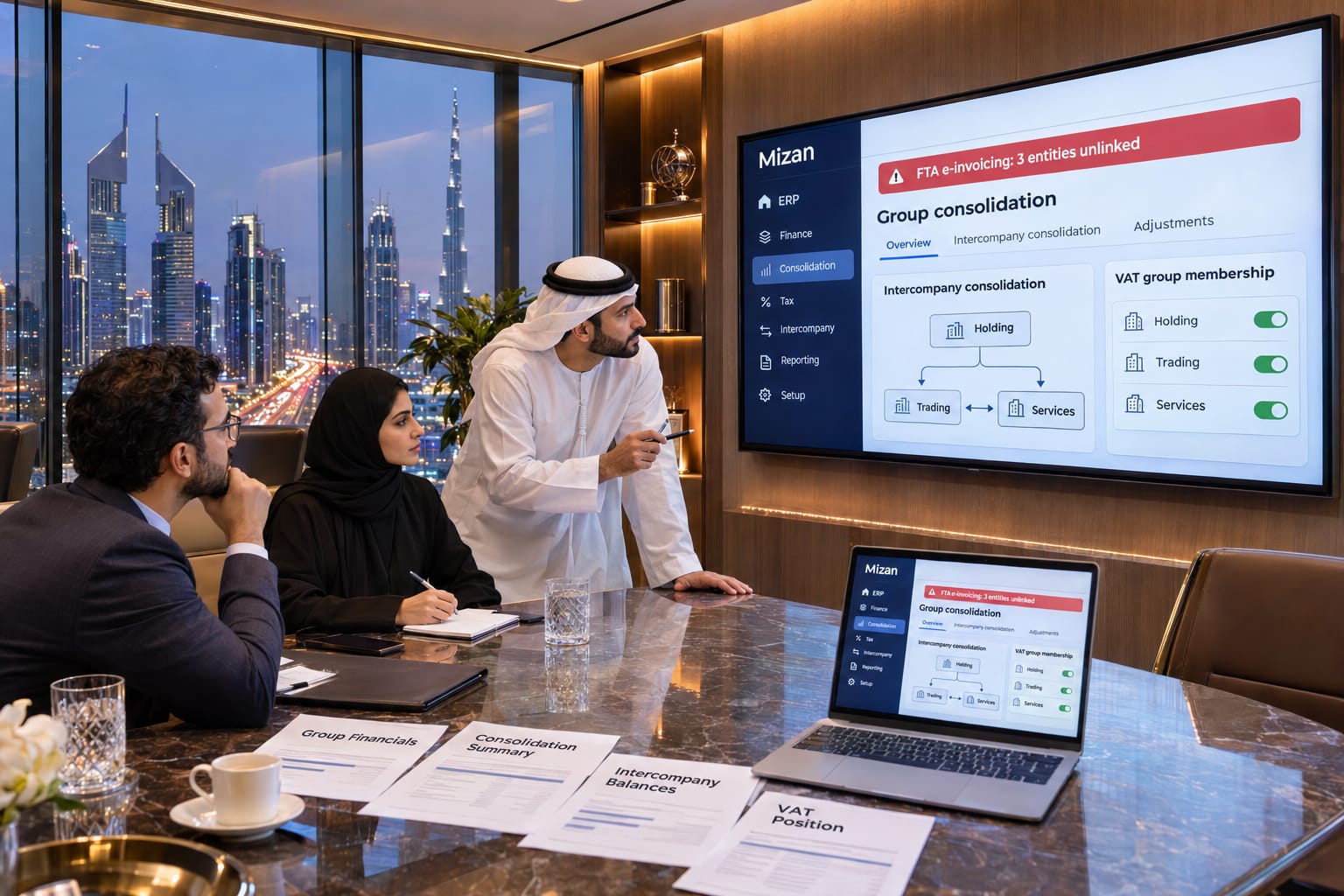
Pricing a Custom ERP for a UAE Multi-Entity Group
A custom multi-entity ERP budget in the UAE is driven less by headcount or screens and more by FTA e-invoicing readiness, intercompany consolidation logic, and the gap between your VAT group and your Corporate Tax group. Here is how to size it honestly before you talk to vendors.

Post-Acquisition System Consolidation: The Case for Your CFO
Six to eighteen months after a UK mid-market acquisition, most integration business cases fail at the CFO's desk because they count duplicate SaaS licences and miss the real money. Here is the argument that lands — hidden reconciliation FTE, Article 30 exposure, and the revenue synergies dual stacks are actively blocking.

Build vs. Buy Enterprise Software: A Budget Holder's Framework
A five-axis framework for the build-vs-buy enterprise software decision — scored honestly, including the case against hiring anyone at all. Plus the one MSA clause that quietly adds six figures to the true cost of switching.

What Staying on Your Legacy ERP Costs the CFO's Own Budget
Most legacy ERP cost estimates stop at the vendor support line. The bigger number sits in finance headcount, blocked enterprise deals, and audit findings — none of which show up on the IT budget. Here is how to put it on one page.

What a Legacy Core System Costs You Before It Fails
The modernization business case your CFO will approve isn't about the cost of replacing the system. It's about quantifying what the business already pays — in AMC renewals, shadow IT, compliance exposure, and blocked revenue — to keep the old one alive.

AI Support Agent Budget: Where the Money Actually Goes
Three vendor quotes for an AI support agent, a 4× price spread, and no way to compare them line-by-line. Here is how the money actually breaks down in a UAE enterprise deployment — and which line items vendors tend to bury.

What DIFC Data Protection Actually Demands of Your Vendor
A DIFC-licensed firm, not its offshore development partner, carries the regulatory exposure when a Controller-Processor Agreement is missing or defective. Here is what DIFC Law No. 5 of 2020 actually demands of the contract, the architecture, and the transfer mechanism.
What to Ask a Reference When You're the Enterprise Buyer
Vendor-supplied references are coached on satisfaction but rarely on change-order volume, IP assignment edge cases, or what happened when the named tech lead quit in month seven. Here are the 15 questions that pull real signal out of a 30-minute call.

What a Data Transfer Agreement Actually Requires of Your Vendor
Your old NDA with the offshore dev partner does not discharge your DPDP obligations. Here is what a data transfer agreement must demand of the vendor — in clauses, in architecture, and in audit evidence.

Build an Internal Tech Team or Keep Your Dev Partner?
The board wants engineering in-house before the next funding round. Here's the decision framework that models the hidden costs — gratuity accruals, 78-day hiring cycles, 28% offer-drop rates — the headcount proposal never shows.

Hiring Your First In-House Engineer After a Failed Outsource
The board says 'bring it in-house' and assumes it's cheaper. Here's the UK-specific maths — employer NI, pension, IR35, idle-cost — and the spend threshold where that instinct finally becomes true.

Consolidating Systems After an Acquisition Without Freezing Operations
The most expensive line in a post-acquisition IT consolidation isn't the migration — it's the dual-licence carry and manual reconciliation headcount accumulating every month the decision is deferred. Here's how to build the board case and sequence the work without freezing operations.